The KODAK Slide N Scan Max is designed to make converting family slides and negatives into digital files a straightforward home task.
This kodak slide n scan max review looks at its film support, direct-to-card workflow, and the tradeoffs to consider before choosing it.
Slide N Scan Max Review Summary
The quick verdict
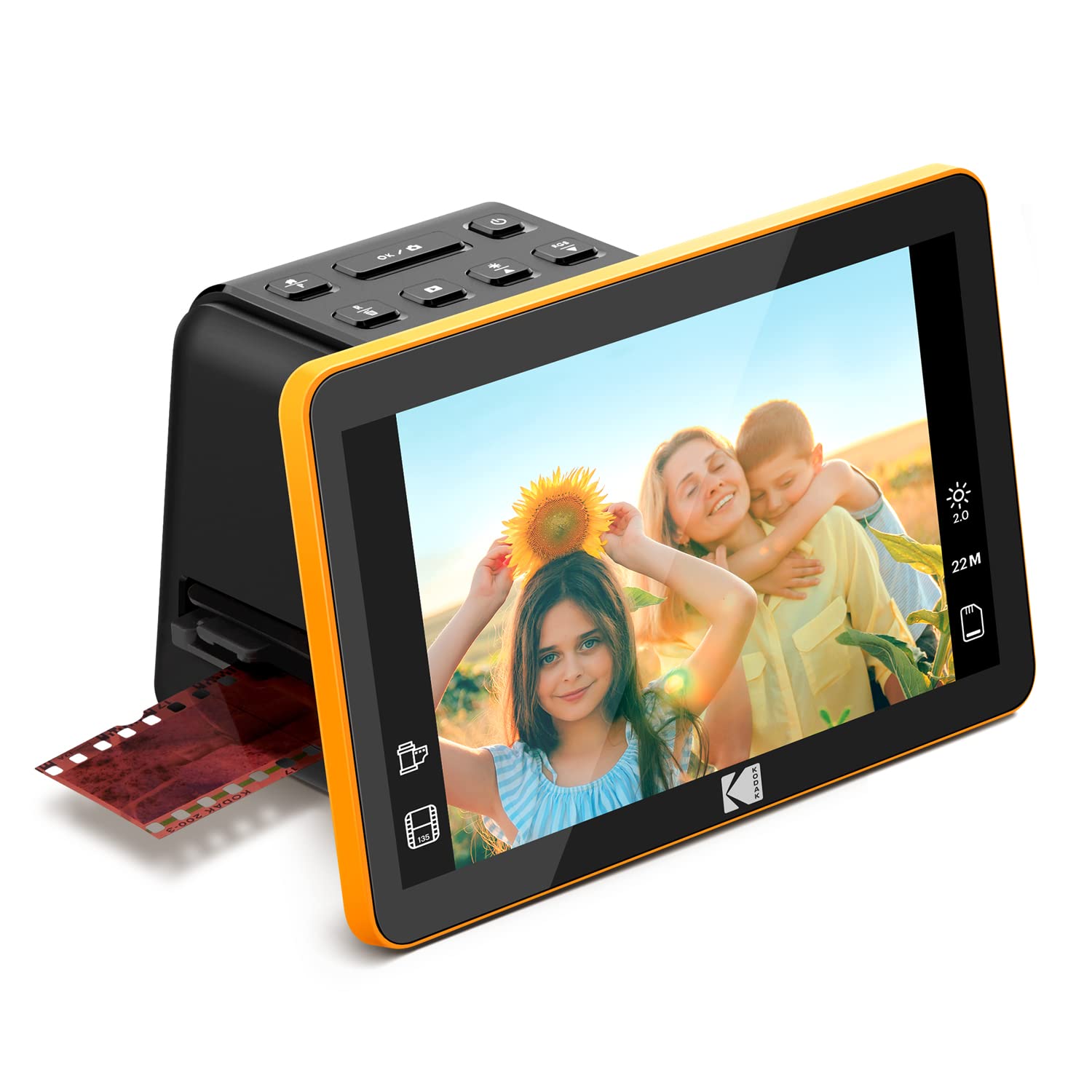
1,000+ ratings
Read Amazon ReviewsKODAK Slide N Scan Max
A practical fit for home archivists who want to digitize 135, 110, and 126 film with on-device editing and direct SD card saving.
- 13MP CMOS sensor with interpolated image output up to 4208 × 3120.
- Supports 135, 110, and 126 film formats, including slides and color or black-and-white negatives.
- Moving tray feeds film to support continuous loading with less repositioning.
- Saves directly to SD or SDHC cards up to 32GB, so a computer is not required for the saving step.

Pros
- Covers three common film formats and both slides and negatives.
- Direct SD or SDHC saving can simplify archiving without a computer in the workflow.
Consider before buying
- The listed formats are 135, 110, and 126, so buyers with other film types should confirm compatibility before choosing it.
- The 22MP figure is interpolated from a 13MP CMOS sensor; buyers focused on native sensor resolution should weigh that distinction.
Read the full review summary
The Slide N Scan Max combines a 13MP CMOS sensor, a moving film tray, and direct saving to SD or SDHC cards up to 32GB.
Its support for 135, 110, and 126 film, including color and black-and-white negatives as well as slides, makes it relevant to households with several common film formats to sort through.
One-touch editing and computer-free saving keep the basic workflow approachable, while the output is listed as up to 4208 × 3120 through 22MP interpolation.
It suits people who want a compact way to make shareable digital copies at home; buyers who need a different film format or a more involved image-editing workflow should check their requirements before buying.
The buying factors
Slide N Scan Max Scorecard
Editorial scores reflect listed features and buyer fit; they are not laboratory measurements or customer ratings.
Film-format coverage
Handles 135, 110, and 126 film, with both slides and color or black-and-white negatives supported.
Workflow simplicity
The moving tray and one-touch editing are designed to reduce repeated repositioning and menu navigation.
Computer-free saving
Direct saving to SD or SDHC cards up to 32GB supports a standalone digitizing routine.
Output flexibility
The sensor is 13MP, with interpolated output up to 4208 × 3120; buyers should distinguish the sensor figure from the larger output dimensions.
Image adjustment
Resize, conversion, and image adjustments are available through the capture software, with emphasis on simple controls.
Workspace footprint
At 6.69 × 5.35 × 4.45 inches and 16 ounces, the scanner is sized for a small home digitizing setup.
Key Features and Specifications of Slide N Scan Max
- 13MP CMOS sensor with interpolated image output up to 4208 × 3120.
- Supports 135, 110, and 126 film formats, including slides and color or black-and-white negatives.
- Moving tray feeds film to support continuous loading with less repositioning.
- Saves directly to SD or SDHC cards up to 32GB, so a computer is not required for the saving step.
- One-touch capture software offers resizing, conversion, and image adjustment.
- USB connection; the listed minimum system requirement is Windows 7.
- Compact body measuring 6.69 × 5.35 × 4.45 inches and weighing 16 ounces.
Pros and Cons of Slide N Scan Max
Pros
- Covers three common film formats and both slides and negatives.
- Direct SD or SDHC saving can simplify archiving without a computer in the workflow.
- Moving tray and one-touch controls are aimed at making batch scanning less fiddly.
- Compact dimensions make it easier to keep on a desk or store between projects.
Consider before buying
- The listed formats are 135, 110, and 126, so buyers with other film types should confirm compatibility before choosing it.
- The 22MP figure is interpolated from a 13MP CMOS sensor; buyers focused on native sensor resolution should weigh that distinction.
- Direct card saving is limited to SD or SDHC cards up to 32GB, so check that capacity fits the size of the archive.
Who Should Buy Slide N Scan Max?
Good fit
Consider the Slide N Scan Max if you have a collection of 135, 110, or 126 slides and negatives and want a dedicated device for home digitizing.
The moving tray and one-touch adjustments may be especially useful when working through a stack of film, while the SD card workflow avoids requiring a computer for each capture.
It is also a plausible choice for someone who wants compact equipment that can be put away between projects.
Before ordering, match your film formats and card capacity to the scanner’s supported range, and consider whether the up-to 4208 × 3120 interpolated output suits how you plan to view, share, or print the resulting files.
Who should skip it
Look elsewhere if your archive depends on film formats outside 135, 110, and 126, or if you need image capture and editing controls beyond the simple workflow described here.
It may not suit a project that requires a higher native sensor resolution: the scanner uses a 13MP CMOS sensor, while the larger output figure relies on interpolation.
What the Slide N Scan Max Means for a Home Film Archive
The format range shapes who can use it
Support for 135, 110, and 126 film gives this scanner a practical span for many mixed family collections.
Because film collections can include less common formats, identify the formats you need to digitize before setting up a batch; the product’s stated range is specific rather than universal.
A tray-led workflow can help with batches
The smooth-moving tray is intended to feed film without constant repositioning. That design is useful when handling multiple frames, but it does not remove the need to organize originals and check captures as you go.
The simple controls favor straightforward conversion over a complex editing session.
Consider sensor resolution and output separately
The scanner pairs a 13MP CMOS sensor with interpolated output up to 4208 × 3120.
The larger dimensions describe the maximum output, not the sensor’s native pixel count, so buyers planning detailed enlargements should decide whether interpolated files meet their needs.
Card saving keeps the workflow self-contained
Saving to SD or SDHC cards up to 32GB can make the scanner convenient for use away from a computer.
It also means the card becomes part of the workflow: choose a supported card and think about how you will transfer, organize, and back up the resulting files.
Alternatives to Slide N Scan Max
Slide & Negative Scanners alternative
100+ ratings
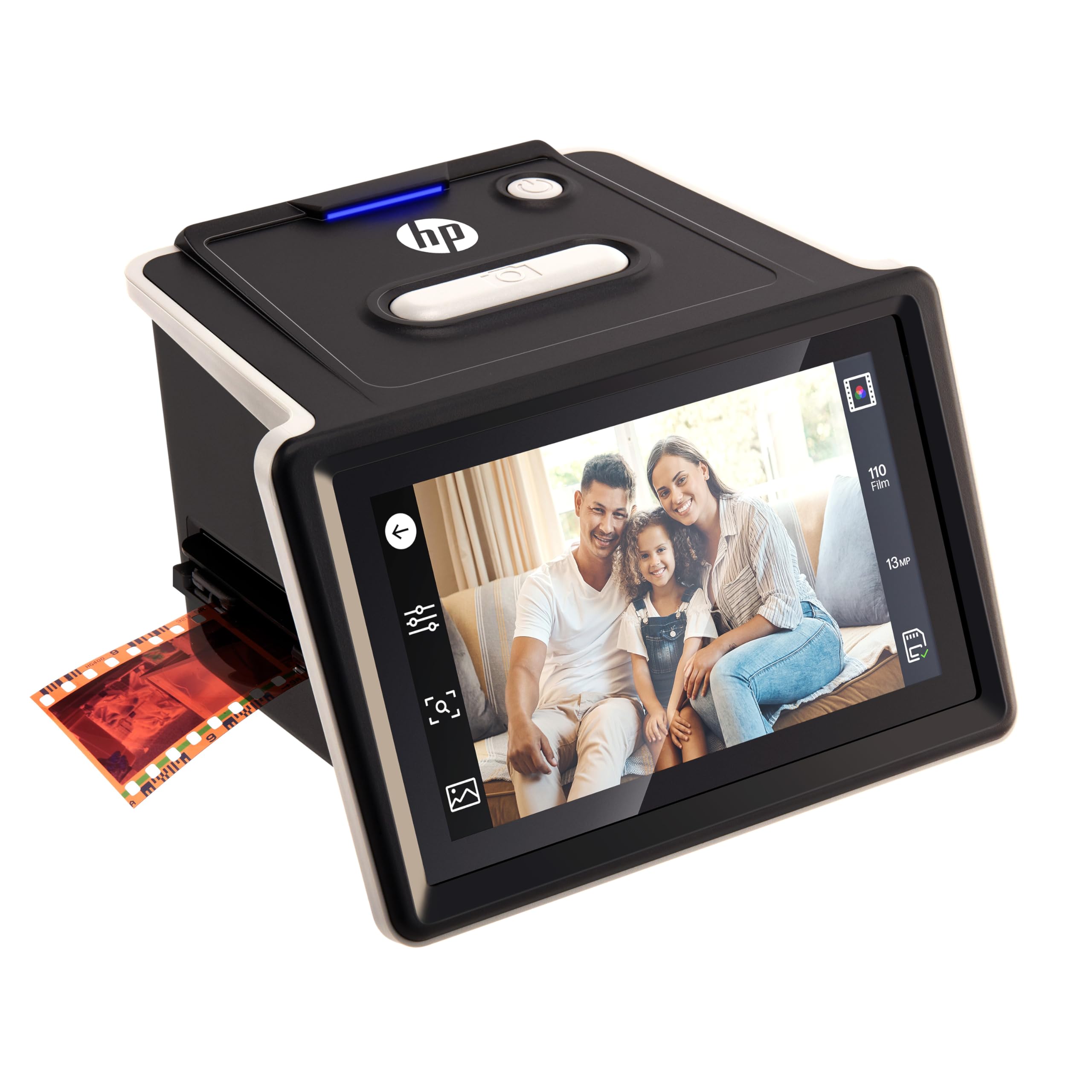
Read Amazon ReviewsHP Film & Slide Scanner HPFS500
Choose between them based on the handling interface and computer setup you prefer: the KODAK emphasizes one-touch editing and a moving tray, while the HP offers a touchscreen and names newer Windows and macOS requirements.
Both cover the same three formats and use a 13MP sensor with interpolated output.
- The HPFS500 also supports 135, 110, and 126 film, has a 13MP CMOS sensor with 22MP interpolation, a 5-inch touchscreen for preview and editing, and saves to an SD card.
- It is powered through USB-C and lists support for Windows 10 or later and macOS 10.15 or later.
- The Slide N Scan Max supports 135, 110, and 126 film and offers a 13MP CMOS sensor with interpolated output up to 4208 × 3120.
Slide & Negative Scanners alternative
12,000+ ratings
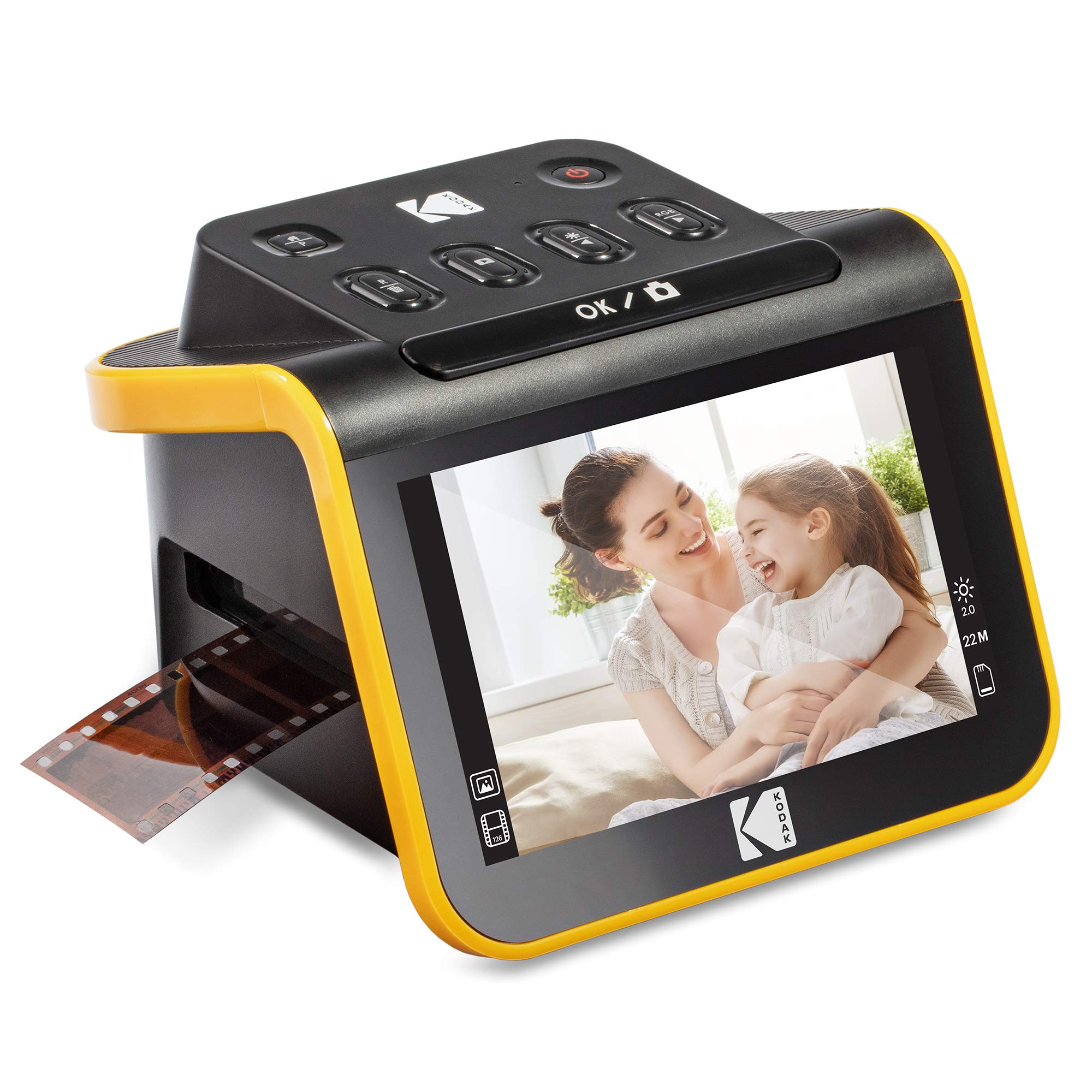
Read Amazon ReviewsKODAK Slide N Scan Film & Slide Scanner
The Max is a reasonable fit if you prioritize its moving tray and compact form.
Consider the Slide N Scan model if an integrated 5-inch screen and the listed adapters and cables better match how you want to preview and handle film.
- This KODAK scanner supports 135, 110, and 126 film, saves to SD or SDHC cards up to 32GB, and includes a 5-inch LCD for previewing and editing.
- Its listed accessories include film adapters, a slide holder, cleaning brush, USB cable, and HDMI cable.
- The Slide N Scan Max supports 135, 110, and 126 film, saves to SD or SDHC cards up to 32GB, and has a 13MP CMOS sensor with interpolated output up to 4208 × 3120.
Is Slide N Scan Max Worth It?
The KODAK Slide N Scan Max is worth considering for a home film archive built around 135, 110, and 126 slides or negatives.
Its moving tray, simple editing, and direct SD card saving make for a clear, compact workflow.
Keep the resolution distinction in mind: 13MP is the sensor figure, and the maximum 4208 × 3120 output uses interpolation.
Confirm your film formats and card needs, then choose it if straightforward digitizing matters more than a more involved editing setup.
Your review at a glance
1,000+ ratings
Read Amazon ReviewsKODAK Slide N Scan Max
A practical fit for home archivists who want to digitize 135, 110, and 126 film with on-device editing and direct SD card saving.
- 13MP CMOS sensor with interpolated image output up to 4208 × 3120.
- Supports 135, 110, and 126 film formats, including slides and color or black-and-white negatives.
- Moving tray feeds film to support continuous loading with less repositioning.
- Saves directly to SD or SDHC cards up to 32GB, so a computer is not required for the saving step.