The KODAK Slide N Scan is designed to make old negatives and slides easier to turn into digital photos, with a large built-in screen for previewing and editing.
This kodak slide n scan film & slide scanner review looks at its format support, straightforward workflow, and the details to weigh before starting an archive project.
Slide N Scan Review Summary
The quick verdict
12,000+ ratings
Read Amazon ReviewsKODAK Slide N Scan
A practical fit for families digitizing 135, 126, or 110 negatives and slides who want on-device previews and direct SD-card saving.
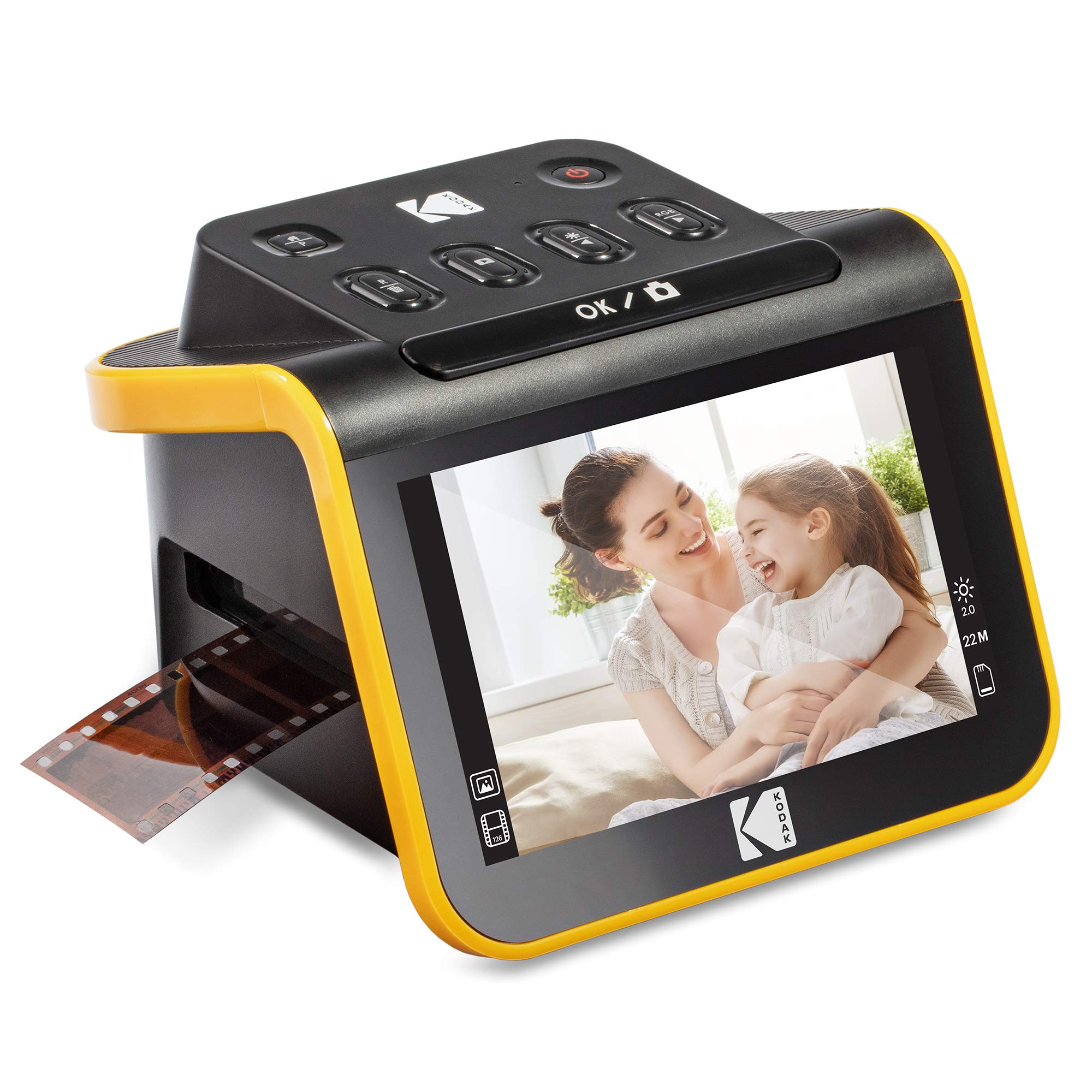
- A 5-inch LCD with a wide viewing angle provides preview, gallery, and editing functions.
- Supports 135, 126, and 110 film negatives, plus slides in those formats and 50 mm slides.
- Quick-feeding tray technology is designed for continuous loading.
- The one-button capture software can resize and convert images and offers film-type, color, brightness, and date/time options.

Pros
- Large built-in display makes it easier to preview and browse scans without first opening them on a computer.
- Direct memory-card saving supports a simple, self-contained scanning routine.
Consider before buying
- The supported formats are specific, so buyers should identify their film types before committing to the workflow.
- An SD or SDHC card is required for direct saving and is not included.
Read the full review summary
This scanner combines a 5-inch LCD, quick-feeding film tray, simple editing controls, and direct saving to an SD or SDHC card.
It supports 135, 126, and 110 negatives and slides, giving families with those formats a self-contained way to work through a box of photos without making a computer the center of every scan.
Its appeal is convenience and immediate viewing rather than a complex, adjustable scanning setup. It may suit someone preserving personal memories for sharing or casual display, especially if the supported film formats match their collection.
Before buying, check the formats in your archive and plan for a compatible memory card, which is not included.
The buying factors
Slide N Scan Scorecard
Editorial scores reflect listed features and buyer fit; they are not laboratory measurements or customer ratings.
Ease of use
A quick-feeding tray and one-button capture workflow are geared toward simple, repeated scanning.
On-device preview
The 5-inch screen and gallery mode make it practical to view and edit scans on the unit.
Format coverage
It handles 135, 126, and 110 negatives and slides, but buyers should match those formats to their collection.
Editing controls
The listed controls cover film type, color, brightness, image size, and date or time assignment.
Standalone workflow
Saving directly to SD or SDHC keeps routine scanning from depending on a computer.
Included setup accessories
Film adapters, a slide holder, cleaning brush, and USB and HDMI cables are included.
Key Features and Specifications of Slide N Scan
- A 5-inch LCD with a wide viewing angle provides preview, gallery, and editing functions.
- Supports 135, 126, and 110 film negatives, plus slides in those formats and 50 mm slides.
- Quick-feeding tray technology is designed for continuous loading.
- The one-button capture software can resize and convert images and offers film-type, color, brightness, and date/time options.
- Saves digital files directly to SD or SDHC cards up to 32 GB; the card is sold separately.
- The package includes a 50 mm slide holder, adapters for 135, 110, and 126 film, a cleaning brush, USB cable, and HDMI cable.
- Connects to a Type-C USB-enabled computer.
Pros and Cons of Slide N Scan
Pros
- Large built-in display makes it easier to preview and browse scans without first opening them on a computer.
- Direct memory-card saving supports a simple, self-contained scanning routine.
- The listed film adapters cover three common formats and a dedicated 50 mm slide holder.
- Basic image adjustments are available at capture time without navigating complex settings.
Consider before buying
- The supported formats are specific, so buyers should identify their film types before committing to the workflow.
- An SD or SDHC card is required for direct saving and is not included.
- The described editing controls focus on basic adjustments; buyers seeking extensive image restoration or fine-grained control should confirm that the workflow meets their needs.
Who Should Buy Slide N Scan?
Good fit
Consider the Slide N Scan if you have boxes of 135, 126, or 110 negatives and slides and want a straightforward way to digitize them at home.
The large display, gallery mode, and on-device controls make it easier to preview a batch as you work, while the continuous-feed design is intended to reduce interruptions between frames.
It is also a sensible choice if you want to save scans straight to a memory card and share or review them later.
Set aside a compatible SD or SDHC card up to 32 GB, and use the included adapters that match your film. The camera and computer can then play supporting roles rather than being necessary for every capture.
For a family archive, the practical advantage is having the preview and basic corrections close at hand.
If brightness or color needs adjustment, the listed controls let you make those choices during the scanning process, instead of requiring a separate editing step for every image.
Who should skip it
Skip this model if the formats in your collection do not match 135, 126, or 110 negatives and slides. Check the film sleeves or labels first, particularly if your archive includes multiple formats.
Look elsewhere if your priority is extensive restoration tools, highly detailed manual control, or a more specialized archival process.
The described workflow emphasizes accessible capture and simple adjustments, so compare the available controls with the amount of refinement your scans will need.
How the Slide N Scan Fits a Home Film Archive
A display-led scanning routine
The built-in 5-inch LCD changes the feel of a batch project: you can preview images and browse a gallery at the scanner itself.
That is useful when you want to decide what to save or make basic adjustments as you go, without repeatedly moving between the scanner and a computer screen.
Format compatibility comes first
This model is intended for 135, 126, and 110 negatives and slides, with a dedicated 50 mm slide holder and adapters for the listed film formats.
Identifying the formats in your collection before purchase will help avoid the frustration of discovering that a particular box does not fit the workflow.
Card-based saving keeps things simple
Direct SD or SDHC saving makes the process feel self-contained: scan to a card, then transfer or view the files when convenient.
Since the card is not included and support is listed up to 32 GB, choose a compatible card before setting aside time for a large scanning session.
Convenient controls, modestly described scope
The capture controls cover film type, color, brightness, resizing, and date or time assignment.
That should be useful for routine family-photo conversion, while buyers with demanding restoration needs should check whether these adjustments provide enough control for the condition and importance of their originals.
Alternatives to Slide N Scan
Slide & Negative Scanners alternative
11,000+ ratings
Read Amazon ReviewsKODAK SCANZA Digital Film & Slide Scanner
Choose the Slide N Scan if a larger screen and the listed 135, 126, and 110 formats fit your needs.
Consider the SCANZA if your collection includes Super 8 or 8 mm film, or if its broader format list and larger stated card capacity better match your archive.
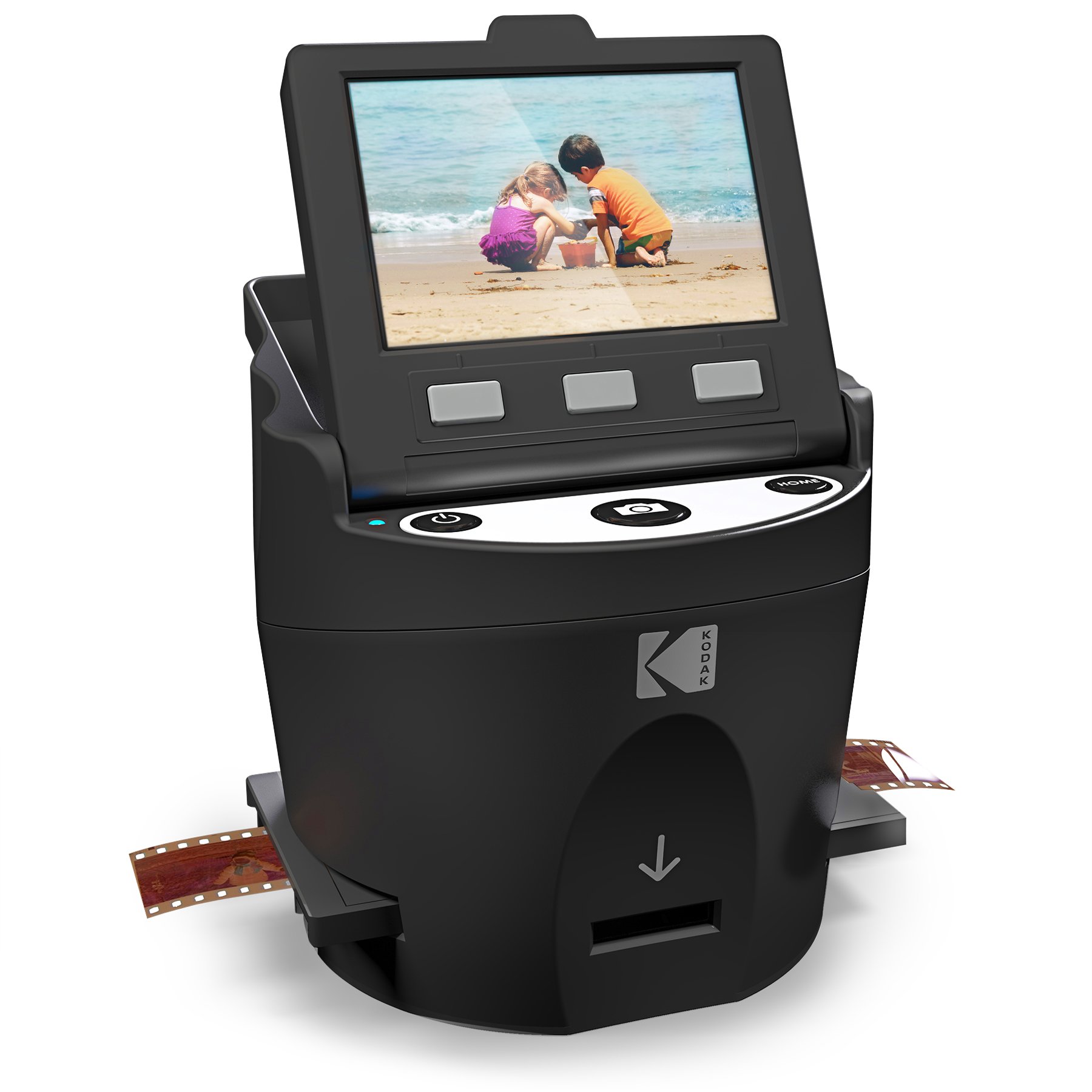
- The SCANZA has a 3.5-inch adjustable-brightness, tilting display and supports 35 mm, 126, 110, Super 8, and 8 mm negatives and slides.
- It includes multiple inserts, RGB and resolution editing, and supports SD cards up to 128 GB.
- The Slide N Scan centers its workflow on a 5-inch LCD, SD or SDHC saving up to 32 GB, and 135, 126, and 110 film formats.
Slide & Negative Scanners alternative
100+ ratings
Read Amazon ReviewsHP FilmScan HPFS500
The two models share a similar screen-led workflow and format coverage.
Compare the HP option if touchscreen operation and its listed sensor and power details matter to you; the Slide N Scan is a fit if its described one-button controls and included adapters suit your routine.
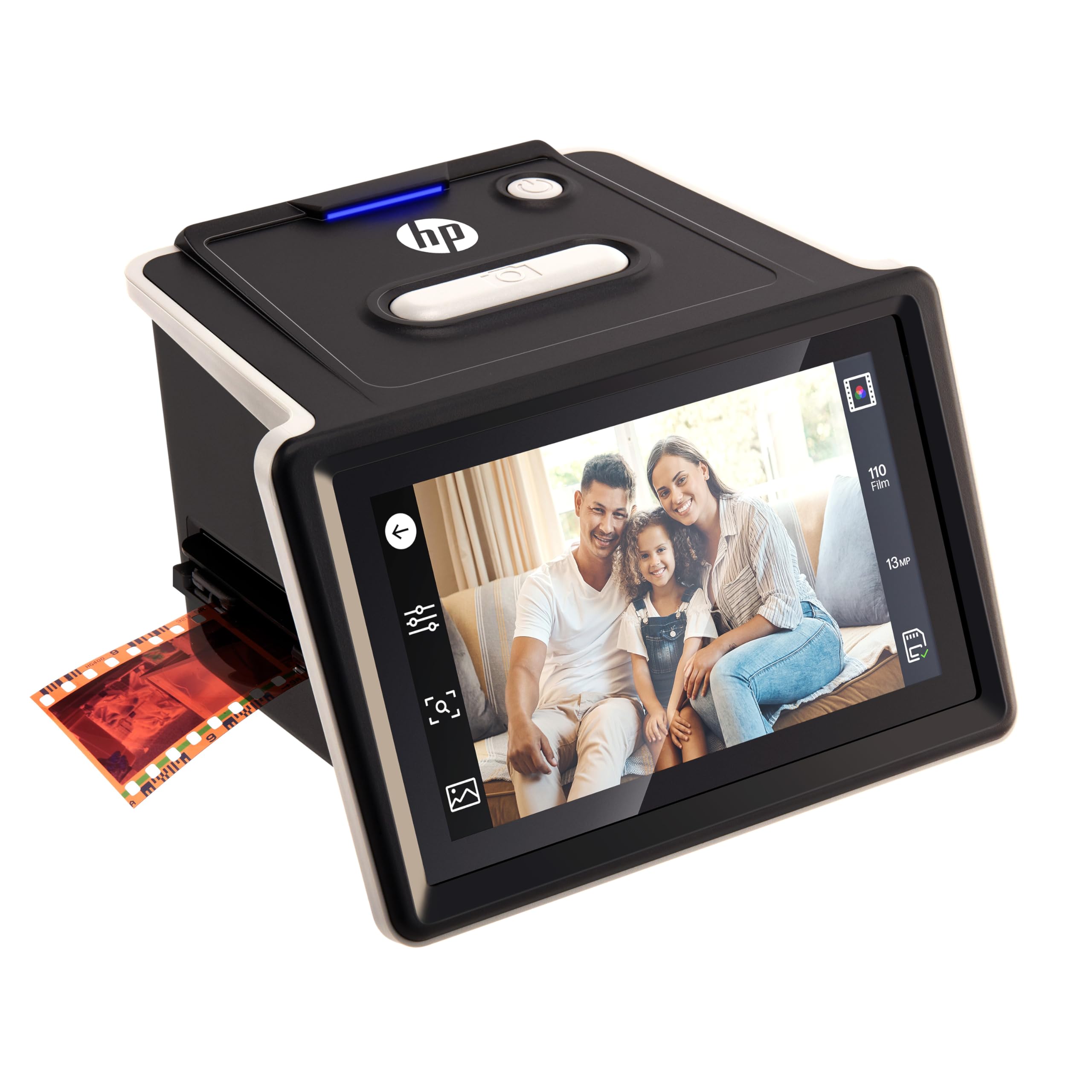
- The HP FilmScan HPFS500 also has a 5-inch touchscreen, preview and editing, direct SD-card saving, and support for 135, 126, and 110 film.
- Its description lists a 13 MP CMOS sensor with 22 MP interpolation and USB-C power.
- The Slide N Scan has a 5-inch LCD, gallery mode, basic capture adjustments, and direct saving to SD or SDHC cards up to 32 GB.
Is Slide N Scan Worth It?
The KODAK Slide N Scan is worth considering for a home archive of 135, 126, and 110 film when simple capture, on-device previews, and direct card saving are the priorities.
Its 5-inch screen, gallery mode, and basic adjustments create a convenient routine for personal photos.
Confirm that your formats match and have an SD or SDHC card ready.
Buyers who need wider format coverage or more extensive image refinement should compare the alternatives and choose based on the actual film and editing needs of their collection.
Your review at a glance
12,000+ ratings
Read Amazon ReviewsKODAK Slide N Scan
A practical fit for families digitizing 135, 126, or 110 negatives and slides who want on-device previews and direct SD-card saving.
- A 5-inch LCD with a wide viewing angle provides preview, gallery, and editing functions.
- Supports 135, 126, and 110 film negatives, plus slides in those formats and 50 mm slides.
- Quick-feeding tray technology is designed for continuous loading.
- The one-button capture software can resize and convert images and offers film-type, color, brightness, and date/time options.